At the waterline
Is the pool leaking, or just evaporating
Every outdoor pool loses some water to sun and wind. A leak loses more, and it does not stop when the weather changes. Two numbers separate the two, and you can check both yourself with a bucket and a piece of tape before you call anyone.
2 in.
The rule of thumb. If you are adding more than two inches of water a week, you may have a leak.
½ in.
The line in the promise. A pool losing half an inch or more a day, with no heater running, is the case our No Find, Full Refund promise is written against.
Signs a pool is losing water it should not
One of these on its own can have a dull explanation. Two or three together, with the level falling faster than two inches a week, is worth a real measurement.
You keep refilling
A constant need to add water, week after week, is the plainest sign.
Chemicals disappear
Excessive chemical use, because fresh water keeps diluting what you add.
The level drops for no reason
Unexplained drops in the water level that the weather does not account for.
Wet ground
Wet spots in the yard or near the pool deck, especially when it has not rained.
Air in the pump
Air showing up in the pump is one of the signs on our list.
Cracks you can see
Visible cracks in the pool or the deck around it.
The bucket test, start to finish
This is the standard check, and it works because the bucket and the pool sit in the same sun and wind. Whatever the bucket loses is evaporation. Whatever the pool loses beyond that is the part to worry about.
Field-check card
Fill the bucket
Fill a bucket with pool water until the level inside matches the level of the pool.
Set it on a step
Set the bucket on the first or second step so it sits in the water, weighted if it floats, and mark the water level inside the bucket and outside it.
Run the pump normally
Leave the pump on its normal schedule for 24 hours. Do not add water and do not swim.
Compare the two marks
The bucket loses water to evaporation only. If the pool dropped by more than the bucket did, suspect a leak.
Repeat with the pump off
Run the same test again with the pump off for 24 hours. A pool that loses far more with the pump running points toward the plumbing; a loss that stays about the same with the pump off points toward the shell, the skimmer or a fitting.
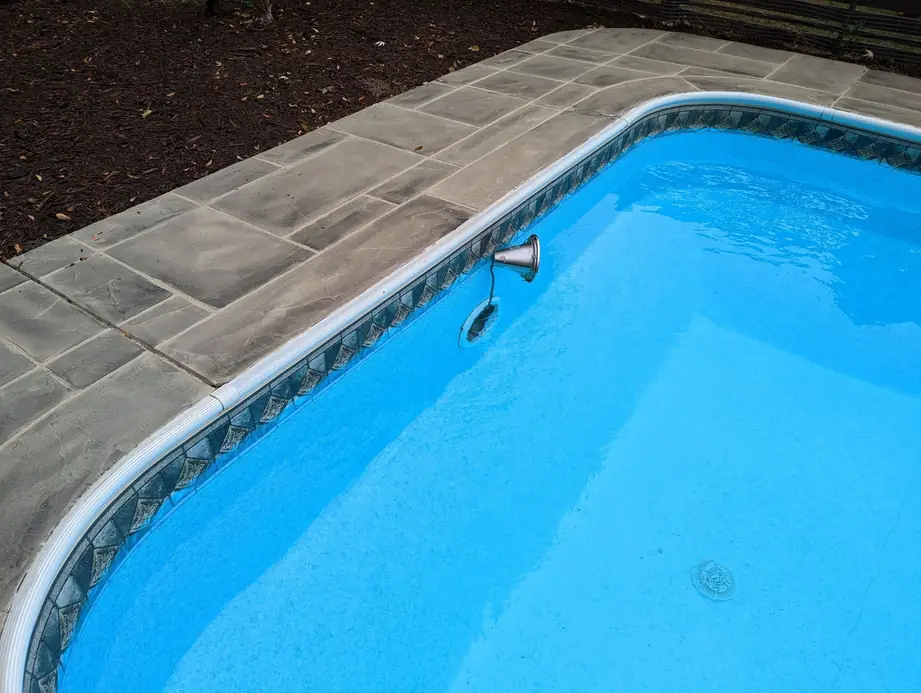
Measuring water loss with a piece of tape
If you would rather not set up a bucket, put a strip of tape on the tile or the skimmer throat at the waterline, with its edge exactly at the water surface. Write down the date and the time. Check it at the same hour the next day, measure the distance from the tape to the new waterline, and write that down too. Do this for several days in a row with no rain, no swimming and no refilling, and you will have a daily rate rather than a feeling.
Keep the heater off while you measure. Then set your numbers against the two lines at the top of this page: more than two inches in a week is the rule of thumb, and half an inch or more in a day is the threshold behind the refund promise. When Aquatrace does a water loss confirmation, the baseline is measured against the day’s evaporation index, and a final measurement is taken after testing and repairs.
The numbers do not tell you where the water is going, only that it is going. Finding the place is the work: pressure testing, listening to the lines under the deck, and, when the shell needs it, a dive. The process page walks through each step, and the FAQ covers cost, preparing the pool and what the findings report includes.
Losing more than that?
Have your daily numbers and the pool type ready: standard, infinity edge, custom or commercial. Rates depend on the pool, so a short phone consultation comes first. Hours are Mon-Fri 9am-5pm, or reach us through the contact page.