Is Your Pool Leaking or Just Evaporating? How to Tell Before You Call
Every pool loses some water, so the real question is whether the sky can explain what you are losing.
October 19, 2026 · 4 min read
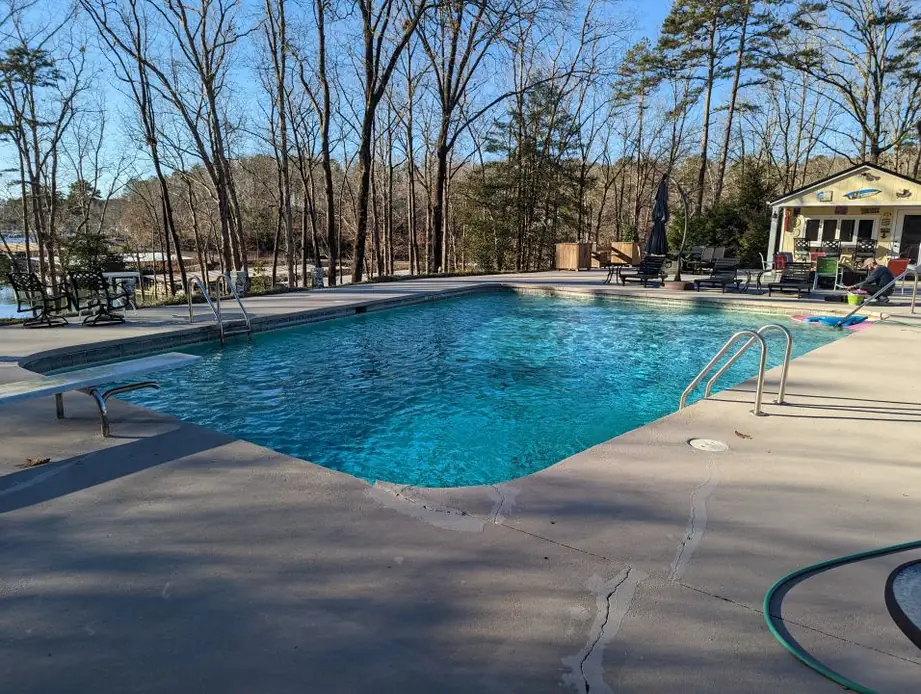
Every pool loses water. The sun pulls it off the surface, the wind carries it away, and swimmers take it out of the pool on their bodies and in their splashes. So when the water line sits lower than it did last week, the first question is not who to call. It is whether you have a leak at all. A few simple checks will answer that, and they make any later call to a leak detection company shorter and more useful.
What evaporation actually does
Evaporation follows the weather. Hot sun, dry air and wind speed it up. Warm water gives up more than cool water, and a pool with a running heater gives up more still. Calm, cloudy, humid stretches slow it down, and a pool with a cover loses less than one left open to the sky.
That pattern is the clue. Evaporation behaves like weather, and a leak behaves like a hole. Weather changes from day to day, and the loss changes with it. A hole keeps taking water whether it is sunny or not, because the weight of the pool is always pushing on it.
Run the bucket test
The bucket test is an old trick in the pool trade because it compares your pool against itself. The bucket and the pool sit in the same sun and the same wind at the same temperature, so any difference between them is water going somewhere other than into the air.
- Fill a bucket with pool water, not tap water, to about an inch below the rim.
- Set it on a step or ledge so it sits in the pool, and weigh it down if it wants to float.
- Mark the water level inside the bucket, and mark the pool level on the outside of the bucket or on the tile with a strip of tape.
- Leave the pump running on its normal schedule. Skip swimming, and make sure nobody tops off the pool.
- Check both marks after 24 hours. Many people repeat it for a second day to be sure.
If the pool and the bucket dropped by about the same amount, evaporation is the likely cause. If the pool dropped clearly more than the bucket, water is leaving by some route other than the air. Aquatrace also offers a bucket test download and a swimming pool evaporation calculator on its website if you want a worksheet to follow.
The two inches a week rule of thumb
Aquatrace's rule of thumb is simple: if you are adding more than two inches of water a week, you may have a leak. Treat it as a reason to test, not a verdict. A hot, dry, windy week can push a perfectly healthy pool close to that number, and a mild, damp week can make a leaking pool look better than it is. That is why the bucket test matters. The two inches tells you when to start paying attention, and the bucket tells you whether the weather explains it.
Things that look like leaks but are not
Before you blame the plumbing or the shell, rule out the ordinary ways water leaves a pool.
- Splash-out from swimmers, kids and cannonballs, especially in a smaller pool.
- Backwashing the filter, which sends a good amount of water to waste.
- Wind-driven waves pushing water over the edge or into a skimmer basket.
- Waterfalls, spillways and other features that throw water onto the deck.
- A heater that has been running, which raises evaporation.
Check the auto-fill
An automatic fill valve is the best friend a hidden leak ever had. It tops the pool off a little at a time, so the water level always looks fine while the valve quietly works overtime. If you have one, listen for it, look for a fill line that runs more often than it used to, and watch for a water bill that creeps up with no change in how you use the pool. To run a clean bucket test or level check, switch the auto-fill off for the length of the test and keep an eye on the level yourself.
Signs that point to a real leak
Some signs deserve attention on their own, even before the numbers are in.
- You are refilling the pool constantly.
- You are using more chemicals than usual, because fresh water keeps diluting what is in there.
- The water level drops and you cannot find a reason.
- There are wet spots in the yard or along the pool deck.
- You see air in the pump, or cracks in the shell or deck.
Write it down before you call
A few notes turn a vague worry into something a technician can work with. Jot down your bucket test result, roughly how many inches you are losing a week, whether you run a heater or an auto-fill, and whether the water seems to stop falling at a particular height. When Aquatrace arrives, the first step is a water loss confirmation: a baseline measured against that day's evaporation index, with a final measurement after the testing and any repairs.
If your bucket test says the pool is losing more than the sky can explain, send Aquatrace a service request or call (864) 710-8636. Chris and Catherine Sears will talk through your pool and set up a visit.
Aquatrace Swimming Pool Leak Detection, (864) 710-8636
Call (864) 710-8636More articles
Pump On, Pump Off: What the Pattern of Your Water Loss Is Telling You
How fast your pool drops with the pump running, with it off, and where the level stops are all clues to where the leak is.
Why a Pool Leak Detector Goes Underwater (and What Your Deck Can't Show)
Some of the most common leak spots in a pool can only be examined up close, from the inside.