Vinyl Liner Pool Leaks: Pinholes, Tears, and What a Patch Can Do
A liner leak is often a small repair, but only if you know the difference between a spot problem and an aging liner.
October 19, 2026 · 4 min read
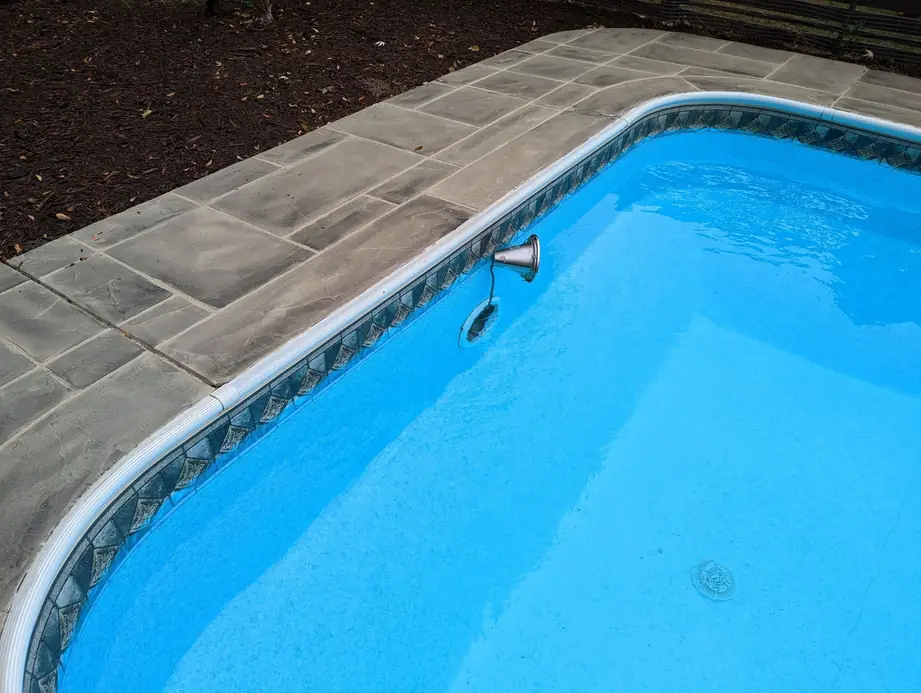
A vinyl liner pool holds its water with a sheet of vinyl stretched over the walls and floor. When that sheet is whole, it does its job quietly for years. When it is not, the leak can be as small as a pinhole and still cost you a surprising amount of water. Liner leaks are some of the most fixable leaks in the pool world, but only if you know what kind of leak you have and what a patch can honestly do.
Where liner leaks come from
- Pinholes, which can come from sharp objects, debris, or small animals and insects. Aquatrace's site discusses pinhole damage caused by fire ants.
- Punctures from dropped tools, pool toys, rocks that got into the pool, or anything with an edge.
- Tears, often along a seam or where the liner has been stretched tight at a corner, step or fitting.
- Spots around the skimmer, returns and light, where the liner is cut and sealed to a fitting.
- General aging, where a liner that has been in the sun and chemicals for many seasons becomes stiff and starts to fail in more than one place.
The first four are spot problems. The last one is a condition. That difference decides everything about what comes next.
Why a small hole is a big deal
A pool is heavy, and the liner is the only thing between that weight and the ground behind the wall. Water finds a pinhole and keeps going through it. Left alone, water behind a liner can wash out the base the liner rests on, and that can turn a small repair into a larger one. If you see the level dropping in a liner pool, it is better to chase it early than to hope it goes away.
Do not drain it to look
The most common mistake with a vinyl liner leak is draining the pool to find the hole. A liner is sized and stretched to fit a full pool. Pull the water out and it can shrink, shift, wrinkle or pop out of its track, and a repair job turns into a replacement. Leave the water in. Note where the level stops falling, since that often points at the height of the leak, and let the person inspecting the pool work with the water in it.
How liner leaks get found
Finding a pinhole in a liner is a matter of getting close and watching the water. Aquatrace's methods include SCUBA underwater inspection with photographs and dye testing, so an inspector can examine the liner, the fittings and the seams up close, and watch whether dye gets pulled toward a spot. A reservoir inspection of the pool basin covers the walls and floor, and pressure testing of the plumbing helps rule the pipes in or out so that nobody patches a liner that was never the problem.
Two Google reviewers describe liner work that fits this picture. One wrote that Aquatrace identified punctures in the liner during the inspection and patched them, and that the patches blended in well. Another wrote that Chris and a team member located two leaks in the liner and repaired the tear.
What a patch can do
A good patch on a small puncture or a short tear can stop that leak. For a clean spot problem in a liner that is otherwise in decent shape, a patch is often the sensible, cost effective answer, and it can be done without draining the pool. If the liner is healthy and the leak was one injury, a repaired injury is a repaired pool. Aquatrace includes simple epoxy and vinyl repairs at no additional charge with the service fee, so a small liner leak can be found and fixed in the same visit.
What a patch cannot do
A patch repairs a spot. It does not make an old liner young. If the vinyl is brittle, faded, shrunken or tearing in more than one place, a patch can hold while a new leak opens up a few feet away. Patches also cannot fix a liner that has pulled out of its track, or a leak that is really in a pipe or fitting. If you find yourself patching the same pool again and again, the pool is telling you the liner has reached the end of its useful life.
When the repair is bigger than a patch
Sometimes the honest answer is a larger repair, or a new liner. Aquatrace does not otherwise offer repair services beyond the simple ones, so for major repairs the team consults with you and recommends the most cost effective solution. For major work they recommend going back to the original contractor, and the findings report and photographs give that conversation something solid to start from.
If your liner pool is losing water and you want to know whether it is a pinhole or an aging liner, send Aquatrace a service request or call (864) 710-8636.
Aquatrace Swimming Pool Leak Detection, (864) 710-8636
Call (864) 710-8636More articles
Is Your Pool Leaking or Just Evaporating? How to Tell Before You Call
Every pool loses some water, so the real question is whether the sky can explain what you are losing.
Pump On, Pump Off: What the Pattern of Your Water Loss Is Telling You
How fast your pool drops with the pump running, with it off, and where the level stops are all clues to where the leak is.